
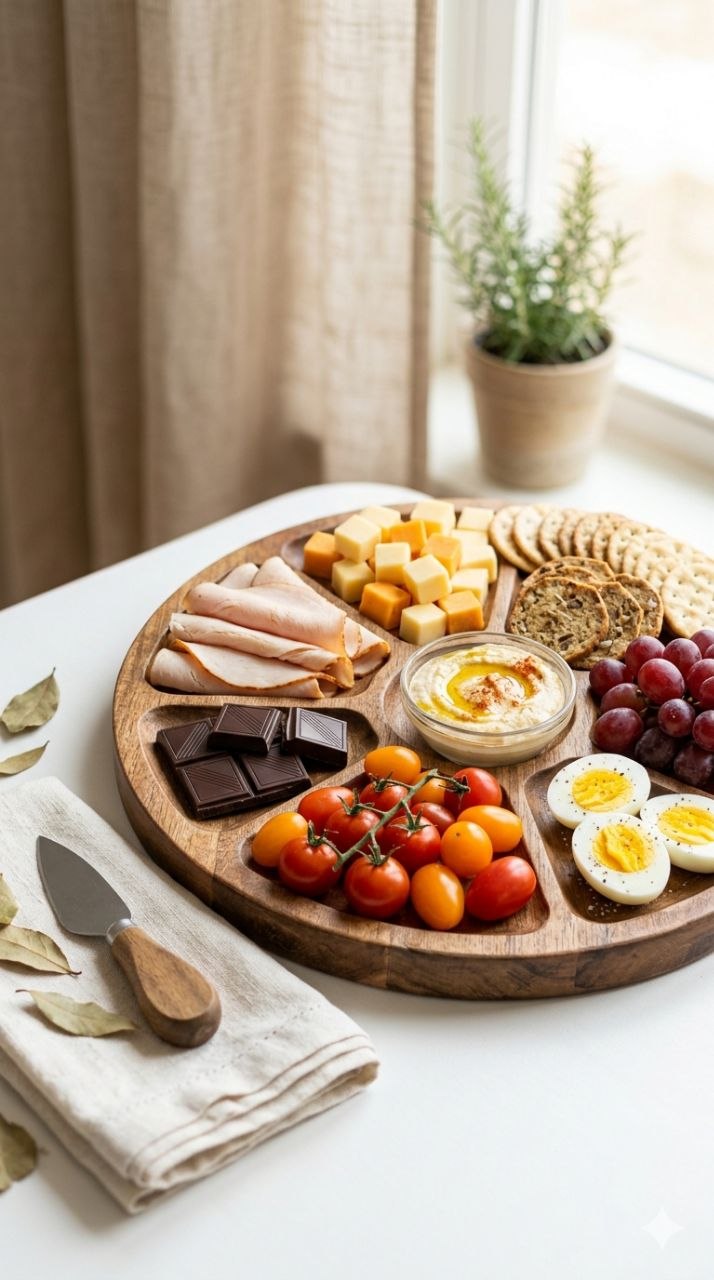
Adult Lunchable Ideas: 4 Effortless Fixes for Cold, Energy-Low, No-Cook Meal Days
The Comfort Intro (Short & Sweet)
These adult lunchable ideas have quietly become a staple in our house, especially during long stretches of cold weather when you want something filling but don’t have the energy for another full cooked meal.
I started putting them together one winter when it was too icy to run errands and I didn’t want to turn the oven on just for lunch. It was one of those grey afternoons where supper was already planned, but noon still needed solving. What began as a practical way to use up odds and ends turned into a regular rotation that now pulls double duty: easy lunches and low-effort dinners.
They’re not fancy. They’re not meant to impress anyone. They’re simply hearty, budget-friendly meals arranged in a way that feels satisfying and warm, even when eaten cold or at room temperature. And on days when the wind is howling and the grocery bill is already high, that’s more than enough.
Why Adult Lunchable Ideas Work So Well
They’re Affordable (and Honest About It)
One of the biggest reasons I keep coming back to these adult lunchable ideas is cost. Everything on the tray comes from ingredients I already buy: cheese blocks, eggs, canned fish, crackers, root vegetables, leftover meat from supper the night before.
When you break it down, most of these lunches come in at $3–$5 per serving, sometimes less if you’re working through leftovers. There’s no special trip to the store and no single-use ingredients that linger in the fridge until they go fuzzy.
They’re Filling Enough for Real Life
This isn’t snack food pretending to be lunch. A proper adult lunchable includes:
- Protein to keep you steady through the afternoon
- Fat for satiety
- Something crunchy or starchy so it feels like a meal
When built properly, these plates hold up through long afternoons, shovelling snow, or back-to-back meetings.
They Reheat or Travel Well
Many of the components can be eaten cold, gently warmed, or packed to go. That flexibility matters in winter, when thermoses and insulated bags become part of daily life.
I’ve packed versions of these for road trips, workdays, and even quick dinners when no one wanted to cook.
Pantry & Fridge Reality (Ingredients)
I think of adult lunchable ideas the same way I think of soup or stew: it’s more about balance than a strict recipe.
Here’s what I usually draw from, with realistic substitutions and budget notes.
Proteins (Choose 1–2)
- Hard-boiled eggs
Cheap, reliable, and filling. I boil a half-dozen at a time.
Cost: about $0.50 per serving - Cheddar or marble cheese
Block cheese is always better value than pre-sliced.
Cost: roughly $0.75–$1 per serving - Canned tuna or salmon
Especially useful in winter when fresh options are limited.
Cost: $1–$2 per serving - Leftover roast chicken or pork
Even small amounts stretch well here.
Cost: essentially free if already cooked - Peanut butter or hummus
Pantry staples that add fat and protein.
Cost: pennies per serving
Carbs & Crunch
- Crackers (saltines, wheat, rye)
Whatever’s on sale works. - Bread, cut into chunks
Day-old bread is perfect. - Boiled potatoes
Surprisingly good cold with salt and butter. - Rice cakes or flatbread
Produce & Pickles
- Carrot sticks, cucumber slices, apple wedges
- Pickles, olives, pickled beets
A bit of acidity makes the whole plate feel complete. - Coleslaw or shredded cabbage
Keeps well and adds crunch.
Small Extras (Optional)
- Mustard, mayo, honey
- Nuts or seeds
- A square of dark chocolate
Nothing here is precious. If the store is out of something, you simply use what you’ve got.
The Cooking Journey (How I Actually Put These Together)
I don’t treat adult lunchable ideas like a recipe I “make.” It’s more of a rhythm I’ve fallen into over the years.
Prep Phase: Setting Yourself Up
First, I start with a small bit of prep that pays off all week. On Sunday afternoon or Monday morning, I’ll boil eggs, wash carrots, and cut a block of cheese in half so it’s ready to slice.
I’ve learned the hard way that if nothing is prepped, lunch turns into toast eaten over the sink.
One common mistake I made early on was overdoing the prep—cutting everything at once and then watching it dry out by Thursday. Now I prep just enough for two or three days and refresh as needed.
Building the Plate
When it’s time to eat, I start with the protein. That anchors the plate. Then I add something crunchy or starchy, followed by something fresh or pickled.
I aim for contrast:
- Soft cheese next to crisp crackers
- Rich tuna balanced with sharp pickles
- Cold potatoes paired with mustard
The kitchen stays quiet during this part. No sizzling. No rush. Just the sound of a knife on the cutting board and the kettle clicking off in the background.
Common Mistakes (and Fixes)
Over the years, I’ve made just about every mistake possible with these:
- Too many dry items
Fix: Add a dip or a bit of butter. Even a spoon of mayo helps. - Not enough protein
Fix: Add another egg or a spoon of peanut butter. - Everything tasting the same
Fix: Pickles. Always pickles. - Cheese sweating and going rubbery
Fix: Let it come to room temperature for 10 minutes before eating. - Feeling hungry an hour later
Fix: Add fat—nuts, cheese, or a drizzle of olive oil. - Overpacking for work lunches
Fix: Smaller containers and realistic portions.
Each mistake taught me something, and now the process feels second nature.
Feeding the Family & Leftover Logic
When I serve adult lunchable ideas for dinner, I put everything out on the table and let everyone build their own plate. It works especially well on nights when appetites are all over the place.
For lunches, I portion them into containers the night before. Leftovers from supper—roast meat, boiled potatoes, even leftover vegetables—slide right in.
Next-day flavour actually improves for things like pickled vegetables and cheeses. If something needs warming, I keep it separate and give it 30 seconds in the microwave before assembling.
Variations for Different Days
The Busy Day Version
- Pre-sliced cheese
- Frozen grapes instead of fresh veg
- Crackers straight from the box
The Sunday Version
- Homemade egg salad
- Roasted root vegetables
- Fresh bread
Winter Pantry Version
- Canned fish
- Pickled vegetables
- Hard cheese and nuts
Lighter Day Version
- More vegetables
- Yogurt-based dip
- Smaller portions of carbs
Dairy-Free Version
- Nuts, hummus, tinned fish
- Olive oil and vinegar for richness
Common Questions (Neighbourly FAQ)
Can adult lunchable ideas really replace a meal?
Yes, if you include protein, fat, and enough volume.
Do they keep well for work lunches?
Absolutely. Use small containers and keep wet items separate.
What’s the best protein if money’s tight?
Eggs and peanut butter, hands down.
Can kids eat these too?
Yes, though I often cut things smaller and skip strong flavours.
Are these safe to eat cold in winter?
Yes, but I sometimes warm one component for comfort.
How do I keep them from feeling boring?
Rotate one element each week—different cheese, different pickle.
Why These Adult Lunchable Ideas Keep Earning Their Place
These adult lunchable ideas aren’t exciting, and that’s exactly why they work. They show up quietly, do their job, and leave you fed without any drama.
In the middle of long weeks, tight budgets, and colder days, that kind of reliability matters. They’ve helped me waste less food, spend less money, and feel more confident feeding myself and my family without always cooking from scratch.
Once you get the hang of them, they become second nature—just another steady tool in a capable kitchen.
🧾 Recipe Card: Practical Adult Lunchable Ideas
Prep Time: 15 minutes
Cook Time: 10 minutes (if boiling eggs or potatoes)
Total Time: 25 minutes
Servings: 1–2 adults
Calories: ~500–700 per serving (varies by components)
Ingredients
- 2 hard-boiled eggs
- 50–75 g cheddar cheese
- 1 cup crackers or bread chunks
- 1 cup raw or pickled vegetables
- 1–2 tbsp dip (hummus, mustard, mayo)
Method
- If needed, boil eggs or potatoes and let cool.
- Slice cheese and vegetables.
- Arrange protein first, then carbs, then produce.
- Add dip or spread.
- Pack or serve immediately.
If you’d like, next we can:
- Build specific adult lunchable combinations (protein-focused, vegetarian, winter pantry-only)
- Create a weekly lunchable rotation
- Or turn this into a Pinterest-friendly series for your site
Just tell me where you want to take it.