Peach Cobbler: 5 Effortless Fixes for Grey, Chilly, Long-Day Dessert Needs
The Comfort Intro (Short & Sweet)
Peach cobbler has been a steady presence in our house for years, especially when we need something warm and reassuring without turning it into a project. It’s the kind of dessert I make when the day’s been long, the weather’s turned a bit chilly, and everyone could use something familiar after supper.
I made this particular peach cobbler on a grey Tuesday, the sort where the sky never really brightens and you start thinking ahead to the rest of the week. Supper was already on the table, lunches were half planned, and I knew we’d want something comforting later on. Peach cobbler fits neatly into that space — warm, filling, and forgiving if you’re not feeling especially precise.
It’s not fancy, and it’s not meant to be. This peach cobbler is about using what you have, stretching ingredients sensibly, and ending the day with something that makes the house feel warmer than it was an hour earlier.
I’ve made peach cobbler with fresh peaches when they’re affordable, with frozen peaches when that’s what’s on hand, and with canned peaches when that’s what fits the grocery budget. All three work. What matters is that it’s reliable, feeds a family, and reheats well enough to justify leftovers the next day.
Why It Works
Peach cobbler earns its place because it’s practical in ways that matter during long weeks and colder months.
First, it’s affordable. Peaches don’t have to be fresh or perfect. Frozen peaches are often cheaper, especially outside of summer, and canned peaches are usually the most budget-friendly option of all. A basic peach cobbler can be made with pantry staples most households already have: flour, sugar, milk, butter, and baking powder. There’s no specialty equipment, and no ingredients you’ll use once and forget about.
Second, it’s filling. This isn’t a light dessert that leaves people rummaging through the cupboard an hour later. Between the fruit and the biscuit-style topping, peach cobbler feels substantial. A modest scoop after supper is enough, especially if you serve it warm. In colder weather, that warmth matters more than people admit.
Third, it reheats well. Peach cobbler is actually better the next day in some ways. The juices settle, the topping softens slightly, and the flavours deepen. It’s one of those desserts that doesn’t punish you for making it ahead or eating it slowly. I often plan on leftovers, because a small square warmed up the next afternoon makes a solid treat with a cup of coffee or tea.
From a cost perspective, this peach cobbler usually works out to a very reasonable price per serving. Using frozen peaches bought on sale, I can often make a full pan for the cost of a single bakery dessert. That matters when you’re feeding a family and trying to keep grocery spending under control.
Seasonally, peach cobbler adapts well to cold climates. Even when peaches aren’t in season, frozen or canned fruit lets you keep this in rotation all year. In winter, it brings a bit of brightness without pretending it’s summer. It’s comfort food, not a fantasy.
Pantry & Fridge Reality (Ingredients)
This is where peach cobbler really shows its practical side. The ingredient list is short, flexible, and forgiving.
Peaches
In our house, I most often use frozen sliced peaches. They’re picked ripe, they keep well, and they’re usually cheaper than fresh outside of peak season. If I find fresh peaches at a good price in late summer, I’ll use them, but I don’t go out of my way. Canned peaches packed in juice are also perfectly fine — just make sure to drain them well so the cobbler doesn’t turn watery.
If you’re shopping carefully, frozen peaches from a big-box store or warehouse club are often the best value per kilogram. I keep a couple of bags in the freezer because they’re useful for more than just cobbler.
Sugar
Plain white sugar works just fine here. Brown sugar can be used for part of it if you like a slightly deeper flavour, but it’s not required. I don’t recommend specialty sugars for this — they don’t add enough to justify the cost.
Flour
All-purpose flour. Nothing fancy. This is the same flour I use for biscuits, pancakes, and most everyday baking.
Butter
Real butter gives the best flavour, and you don’t need much. If butter prices are high, I wait for a sale and keep it in the freezer. Margarine will work in a pinch, but the flavour won’t be quite the same.
Milk
Any milk you have is fine — 2%, whole, or even a mix of milk and a bit of cream if that’s what’s in the fridge. I’ve made this with milk thinned slightly with water when we were running low, and it still worked.
Baking Powder
This gives the topping its lift. Check that it’s fresh; old baking powder can make the topping dense.
Salt & Cinnamon
Just a pinch of salt to balance the sweetness, and a bit of cinnamon if you like. Cinnamon isn’t mandatory, but it adds warmth that suits peach cobbler well, especially in colder months.
All told, this peach cobbler usually comes out to a modest cost per serving, especially if you’re using frozen or canned peaches and ingredients you already have. It’s the sort of recipe that rewards a well-stocked pantry and a sensible shopping habit.
The Cooking Journey (Experience-Based, Step-by-Step)
I usually start peach cobbler by getting the oven going first. There’s nothing worse than having everything mixed and ready only to realize the oven’s still cold. I set it to a moderate heat — hot enough to get the topping golden, but not so hot that the fruit scorches before the middle cooks through.
Next, I deal with the peaches. If they’re frozen, I don’t bother thawing them completely. I’ll let them sit on the counter just long enough that I can separate the slices. If they go into the baking dish still a bit icy, that’s fine — they’ll release their juices as they cook.
I put the peaches straight into the baking dish and sprinkle them with sugar and a bit of cinnamon. At this stage, I gently toss them right in the dish. It saves washing another bowl, and I’ve learned over the years that fewer dishes make a recipe more likely to get made again.
Once the peaches are settled, I move on to the topping. I melt the butter first, either in a small saucepan over low heat or in the microwave if I’m short on time. I don’t let it brown — just melted and warm.
In a mixing bowl, I stir together the flour, sugar, baking powder, and salt. I’ve learned not to rush this step. If the baking powder isn’t evenly mixed, you can end up with uneven rising, and parts of the topping will be dense while others puff up too much.
Then I add the milk and melted butter to the dry ingredients. I stir just until everything comes together. The batter should be thick but pourable, somewhere between pancake batter and biscuit dough. If it feels too thick, a splash more milk fixes it. If it’s too thin, a spoonful of flour brings it back.
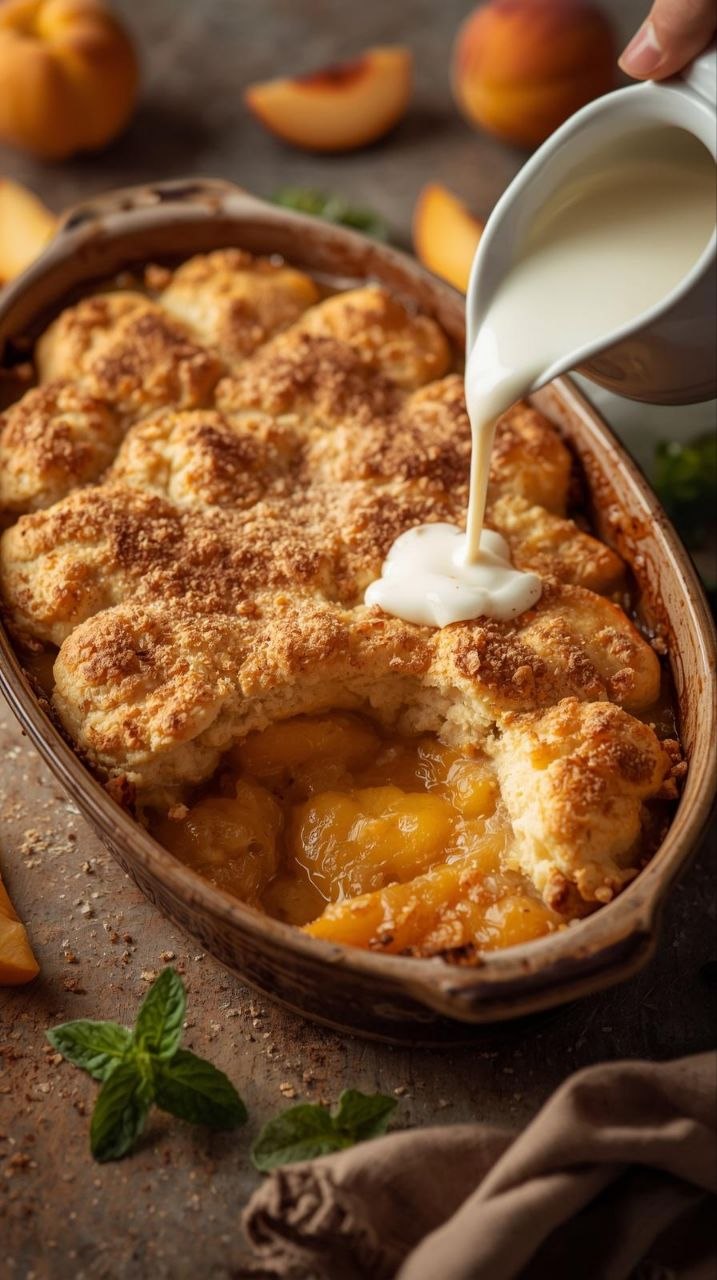
Now comes the part that took me a few tries to get right over the years: spreading the topping. I spoon it gently over the peaches, rather than pouring it all in one spot. It doesn’t have to cover every bit of fruit perfectly. As it bakes, it will spread and rise, leaving some peaches peeking through. That’s part of what makes peach cobbler what it is.
Once it’s in the oven, the kitchen starts to change. After about ten minutes, you’ll hear a gentle bubbling as the peaches release their juices. Soon after, the smell starts — sweet, warm, and unmistakably comforting. It’s the kind of smell that draws people into the kitchen without you saying a word.
I usually bake peach cobbler until the top is golden and the fruit is bubbling up around the edges. The centre should feel set when lightly pressed, not wet or jiggly. If the top is browning too quickly, I loosely cover it with foil and let it finish baking underneath.
Real-Life Mistakes (And Fixes)
Over the years, I’ve made most of the common mistakes with peach cobbler, and none of them were the end of the world.
One mistake is using peaches that are too wet. This often happens with canned peaches that haven’t been drained well. If the cobbler looks soupy halfway through baking, I let it bake a bit longer uncovered. The extra time usually evaporates enough liquid to fix it.
Another is overmixing the topping. When I’ve stirred too much, the topping comes out tough instead of tender. Now I stop mixing as soon as there are no dry streaks left.
I’ve also scorched the bottom before, especially when using a thin baking dish. Placing the dish on a baking sheet helps distribute heat more evenly and protects the bottom.
Once, I added too much sugar to the peaches, thinking they needed it. The result was cloying. If your peaches are sweet to begin with, you don’t need much sugar at all. You can always serve it with a drizzle of cream if it needs balancing.
Another common issue is underbaking the centre. The edges can look done while the middle is still doughy. I now check the centre with a spoon before taking it out of the oven.
Finally, I’ve learned not to rush serving it. Fresh out of the oven, peach cobbler is molten and unstable. Letting it rest for 15–20 minutes helps it set and makes serving easier.
Feeding the Family & Leftover Logic
When it comes to serving, I keep it simple. Warm peach cobbler on its own is perfectly fine. If we have vanilla ice cream or a bit of cream in the fridge, that’s a nice addition, but it’s not required.
For a family, I cut generous but sensible portions. This dessert fills people up, especially after a hearty family dinner. There’s no need to overdo it.
Leftovers are where peach cobbler really shines. Once cooled, I cover the dish and keep it in the fridge. The next day, the flavours have settled, and the texture is even better in some ways.
To reheat, I warm individual portions in the microwave until just heated through. If reheating a larger amount, the oven works well — covered loosely so the top doesn’t dry out.
Leftover peach cobbler also makes a surprisingly good breakfast on a cold morning, especially with a bit of yogurt. I don’t make a habit of it, but I won’t pretend it hasn’t happened.
Variations for Different Days
The Busy Day Version
Use frozen peaches straight from the freezer and mix the topping in one bowl. Minimal prep, minimal dishes, still comforting.
The Sunday Version
Add a touch of vanilla to the peaches, use a bit of brown sugar for depth, and bake it slowly until deeply golden.
The Winter Pantry Version
Use canned peaches and add extra cinnamon or a pinch of nutmeg for warmth.
The Lower-Sugar Version
Cut back on sugar in both the fruit and topping. Serve with unsweetened cream if needed.
The Extra-Filling Version
Add a handful of oats to the topping for a heartier texture.
Common Questions (Neighbourly FAQ)
Can I make peach cobbler ahead of time?
Yes. It keeps well in the fridge for a couple of days and reheats nicely.
Can I freeze peach cobbler?
You can, though the topping softens. It’s still good, just different.
Do I need fresh peaches?
No. Frozen and canned both work well.
Why is my topping gummy?
Usually from overmixing or underbaking.
Can I use a different fruit?
Yes. This method works with apples, berries, or a mix.
What size pan should I use?
A standard 9×13-inch dish works well for a family.
Closing (Grounded Reassurance)
Peach cobbler keeps earning its place in our house because it’s dependable. It doesn’t demand much, it forgives small mistakes, and it delivers comfort when the days feel long.
It’s the kind of recipe that builds quiet confidence in the kitchen. Once you’ve made it a few times, you stop worrying and start trusting your instincts. And that, I’ve found, is how good home cooking really settles in.
🧾 Recipe Card: Peach Cobbler
Prep Time: 15 minutes
Cook Time: 45 minutes
Total Time: 1 hour
Servings: 6–8
Calories: Approximately 320 per serving (varies by ingredients)
Ingredients
- 6 cups sliced peaches (fresh, frozen, or canned; drained)
- ½ cup sugar (adjust to taste)
- 1 tsp cinnamon (optional)
- 1 cup all-purpose flour
- ½ cup sugar
- 2 tsp baking powder
- ¼ tsp salt
- ¾ cup milk
- ¼ cup butter, melted
Method
- Preheat oven to 190°C (375°F).
- Place peaches in a baking dish. Sprinkle with sugar and cinnamon; toss gently.
- In a bowl, mix flour, sugar, baking powder, and salt.
- Stir in milk and melted butter until just combined.
- Spoon topping evenly over peaches.
- Bake uncovered for 40–45 minutes, until golden and bubbling.
- Let rest 15 minutes before serving.
If you want, next we can:
- lock this into a site-wide template
- adapt it into Pinterest pin descriptions
- or write the next recipe in the same voice (apple crisp, chicken stew, tuna casserole — all natural neighbours to this one)
Just tell me what you want to build next.