High Protein Salads: 4 Effortless Fixes for Grey, In-Between, Not-Just-Salad Days
High protein salads have become a steady staple in our house, especially on those in-between days when it’s not quite stew weather, but we still need something filling. It was a grey Tuesday when I first started leaning on these more often — chilly enough for sweaters, but not cold enough to justify turning the oven on for hours.
I used to think of salad as a side dish. Something polite. Something that left you rummaging in the cupboard an hour later.
But these high protein salads are different. They’re built to hold you through the evening. They’re the kind of hearty family dinner that feels sensible and balanced without being fussy. And when groceries are what they are these days, that matters.
Why It Works
It’s Affordable
When I build high protein salads, I rely on affordable protein sources:
- Canned beans
- Eggs
- Rotisserie chicken stretched over two meals
- Lentils
- Cottage cheese
- Tinned tuna
These aren’t luxury ingredients. They’re pantry staples. I can usually make a big bowl of high protein salad for about $2–$4 per serving, depending on what protein I’m using and what’s on sale.
A bag of dried lentils costs very little and feeds us twice. A $10 rotisserie chicken becomes dinner and next-day lunches. Even canned chickpeas, bought in bulk, work out to under a dollar per can.
That’s a budget-friendly meal I can stand behind.
It’s Filling
Protein changes everything.
When I make high protein salads, I aim for at least 20–30 grams of protein per serving. That might look like:
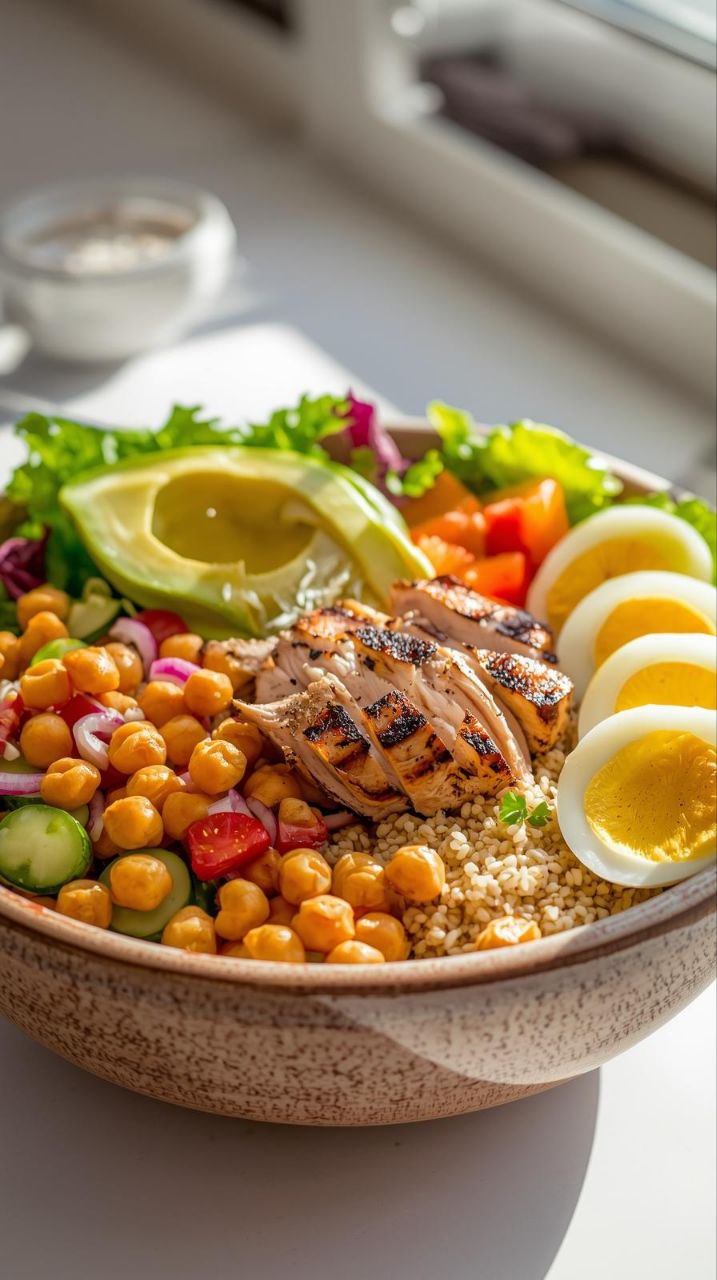
- 1 cup chickpeas (about 14g)
- 1 hard-boiled egg (6g)
- ½ cup cottage cheese (12–14g)
- A handful of chicken (15–20g)
Pair that with fibre-rich greens and grains, and you’ve got a proper meal.
These salads don’t leave you cold or hungry. They hold up through homework, dishes, and that last cup of tea before bed.
It Reheats (or Holds) Well
Not every salad reheats nicely, but high protein salads made with grains, beans, or roasted vegetables actually improve overnight.
I often make a large bowl after supper prep. We eat half fresh, and the rest goes into containers for lunches.
Some versions are best served at room temperature. Others warm gently in a frying pan. That flexibility is gold during a busy week.
And in a Canadian kitchen — especially in winter — cold, watery lettuce just doesn’t cut it. These have substance.
Pantry & Fridge Reality (Ingredients)
When I talk about ingredients, I think like I’m chatting over the fence.
Here’s what I usually rely on for high protein salads:
Proteins (Pick One or Combine)
- Chickpeas or black beans – cheap, filling, easy
- Lentils – dried are cheapest; cook in 20–25 minutes
- Eggs – always affordable protein
- Rotisserie chicken – stretch it
- Canned tuna – keep a few tins on hand
- Cottage cheese or Greek yogurt – great in dressings too
If chicken is too pricey one week, I double up on beans. If eggs are on sale, I make egg-based salad bowls.
The Base
Instead of relying only on lettuce, I mix:
- Spinach (often on sale)
- Shredded cabbage (lasts longer than lettuce)
- Cooked quinoa or brown rice
- Barley (excellent in winter)
- Kale (massaged with oil)
Cabbage is especially good for winter. It’s cheap, lasts weeks, and doesn’t wilt into sadness.
Vegetables
Whatever’s affordable and in season:
- Carrots
- Frozen corn
- Cucumbers
- Roasted sweet potatoes
- Bell peppers (when on sale)
- Green onions
Frozen vegetables are perfectly fine here. I’ve used frozen broccoli many times.
Dressing
Simple and practical:
- Olive oil
- Vinegar or lemon juice
- Dijon mustard
- Salt and pepper
Sometimes I stir cottage cheese into the dressing for extra protein.
Nothing fancy. Just balanced flavour.
The Cooking Journey (Experience-Based)
When I’m making high protein salads, I think in layers.
First, I start by getting the protein going.
If I’m using lentils, I rinse them well under cold water. Then I bring a pot of salted water to a boil. Once boiling, I lower to a steady simmer. Lentils take about 20 minutes. They should be tender but not mushy.
One mistake I made early on? Overcooking lentils until they fell apart. If that happens, your salad turns pasty. The fix is simple: taste them at 18 minutes. Drain as soon as they’re just tender.
If I’m using chicken, I shred it while it’s still slightly warm. It absorbs dressing better that way.
Next, I prep the vegetables.
I chop carrots small. Big chunks don’t distribute well and leave bites uneven. I’ve learned that consistency in size matters more than perfection.
If I’m roasting vegetables like sweet potatoes, I toss them in oil and salt, spread them out properly (crowding leads to steaming, not roasting), and bake at 400°F until caramelized. The smell fills the house — earthy and warm.
Second mistake? Overcrowding the pan. If they’re piled up, they go soggy. Spread them out or use two pans.
Once everything’s ready, I build the base.
I combine greens and grains in a large bowl. If using kale, I massage it with a drizzle of oil and a pinch of salt. It softens and deepens in colour.
Third mistake I’ve made: dressing too early. If you pour dressing over hot grains, everything wilts. Let grains cool slightly first.
Then I add protein. Beans get rinsed and dried. Wet beans water down dressing.
Fourth mistake: not drying canned beans. A quick pat with paper towel makes a difference.
I whisk dressing in a jar. Oil, vinegar, mustard, salt. Shake well.
I pour half first, toss, then taste. It’s easier to add than take away.
Fifth mistake: overdressing. Once it’s swimming, you can’t undo it. Add slowly.
Finally, I fold in delicate ingredients like cucumber or herbs last.
The finished salad should feel balanced — not heavy, not sparse. You want bites with protein in every forkful.
Feeding the Family & Leftover Logic
In our house, I serve high protein salads in big shallow bowls.
For adults, about 2–3 cups per serving works well. For teenagers or big appetites, closer to 4 cups.
If I think it might not stretch, I serve it with:
- Whole grain bread
- A bowl of soup
- Roasted potatoes
Leftovers go into containers immediately. If using greens, I keep dressing separate for next day.
Some high protein salads actually improve overnight. Lentil and roasted vegetable versions taste deeper the next day.
If it thickens too much, I add a squeeze of lemon or a splash of water before reheating.
You can also:
- Stuff it into wraps
- Spoon it over toast
- Turn it into a warm grain bowl by heating gently
Leftovers are part of the plan, not an afterthought.
Variations for Different Days
The Busy Day Version
Use canned beans, pre-washed greens, and rotisserie chicken. Skip roasting. Add frozen corn straight from thawed.
Dinner in 15 minutes.
The Sunday Version
Slow-cook a pot of lentils with bay leaf and garlic. Roast two trays of vegetables. Make extra dressing for the week.
It becomes a slow-cooker favourite for winter nights when paired with warm bread.
Winter Comfort Version
Use barley, roasted carrots, sweet potatoes, and warm chickpeas. Serve slightly warm. It feels like easy comfort food Canada style.
Summer Fresh Version
Use cucumber, tomato, feta, chickpeas, lemon dressing.
Lower-Carb Version
Skip grains. Double greens and protein.
Common Questions (Neighbourly FAQ)
1. Can I make high protein salads ahead for the week?
Yes. Keep dressing separate if using delicate greens. Grain-based ones hold beautifully for 3–4 days.
2. How much protein should I aim for?
Around 20–30 grams per serving keeps it filling.
3. Can I freeze them?
Not fully assembled. But cooked lentils or roasted vegetables freeze well.
4. What if my salad tastes bland?
Usually it needs more salt or acid. Add lemon juice first.
5. How do I keep it from getting watery?
Dry beans and vegetables well. Salt watery vegetables like cucumber lightly and let sit before adding.
6. Are high protein salads good for kids?
Yes. Keep flavours simple. Serve components separately if needed.
Closing (Grounded Reassurance)
High protein salads have earned their place here because they’re steady.
They’re the kind of hearty family dinner that doesn’t feel heavy but still satisfies. They stretch ingredients. They respect the grocery bill. They turn leftovers into tomorrow’s lunch.
And over time, making high protein salads builds confidence. You learn balance. You learn seasoning. You learn that simple food, made thoughtfully, is enough.
On long weeks, that reliability matters.
RECIPE CARD
Everyday High Protein Salad (Flexible Family Version)
Prep Time: 20 minutes
Cook Time: 25 minutes (if cooking lentils or roasting vegetables)
Total Time: 45 minutes
Servings: 4 large servings
Calories: Approximately 450–550 per serving (varies by protein choice)
Ingredients
Protein (choose one or combine):
- 2 cups cooked lentils (about 1 cup dried) – budget-friendly bulk item
OR - 2 cups shredded rotisserie chicken
OR - 2 cans chickpeas, drained and rinsed
Base:
- 4 cups chopped spinach or shredded cabbage
- 1 cup cooked quinoa, brown rice, or barley
Vegetables:
- 1 cup shredded carrots
- 1 cup cucumber, chopped
- 1 cup roasted sweet potatoes (optional)
Dressing:
- ¼ cup olive oil
- 2 tablespoons vinegar or lemon juice
- 1 teaspoon Dijon mustard
- ½ teaspoon salt
- ¼ teaspoon pepper
Method
- Cook lentils in salted boiling water for 20–25 minutes until just tender. Drain and cool slightly.
- If roasting vegetables, preheat oven to 400°F. Toss chopped vegetables in oil and salt. Roast 25 minutes until browned.
- In a large bowl, combine greens and cooked grain.
- Add protein of choice.
- Add vegetables.
- In a jar, shake together dressing ingredients.
- Pour half the dressing over salad and toss gently.
- Taste and adjust seasoning, adding more dressing if needed.
- Serve immediately or refrigerate up to 4 days.