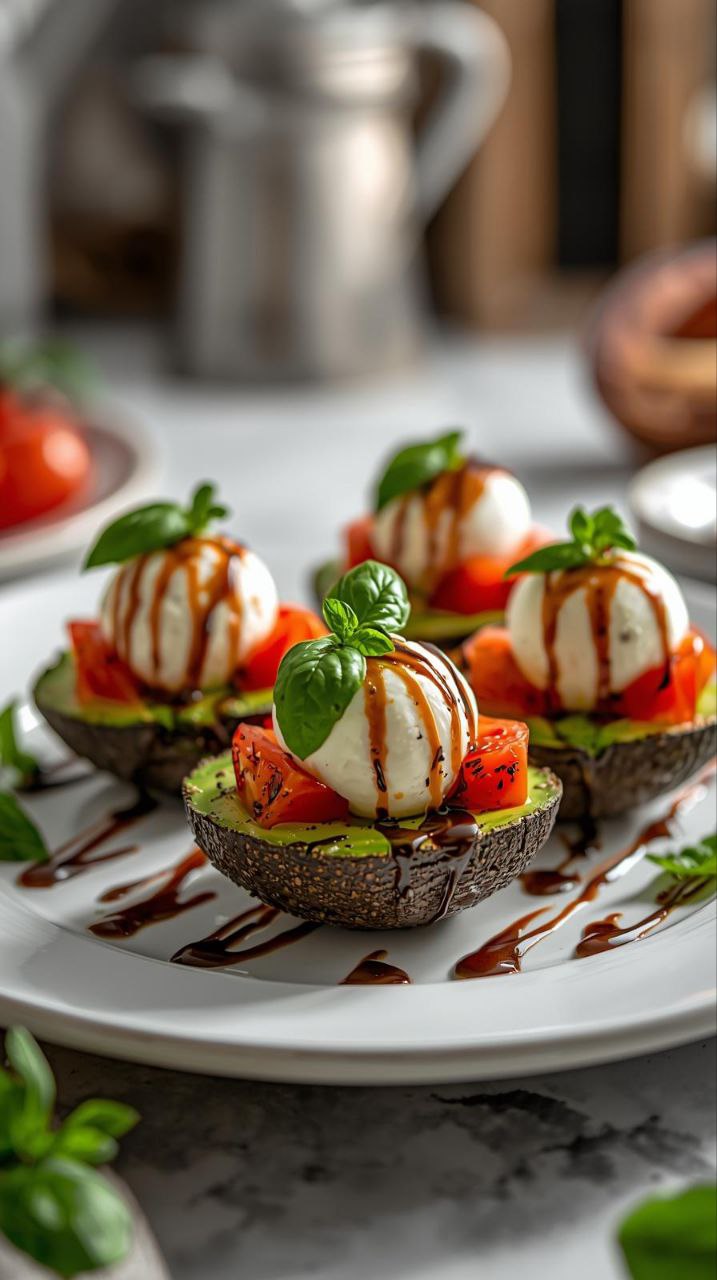
Caprese Avocado Boats: 5 Effortless Fixes for Grey, In-Between, Kitchen-Upside-Down Days
Caprese avocado boats are one of those meals I come back to when I want something comforting but don’t want to turn the whole kitchen upside down. In our house, they’ve become a reliable lunch-for-supper option, especially on those grey, in-between days when it’s not quite cold enough for stew but still too chilly for anything straight-from-the-fridge.
I first started making caprese avocado boats one early spring evening when the snow was finally shrinking but the wind still had a bite to it. I had avocados ripening on the counter faster than expected, a handful of tomatoes that needed using, and not much appetite for fuss. What came together felt simple, warm in its own way, and surprisingly filling.
Since then, these caprese avocado boats have earned a steady place in our meal rotation. They’re easy comfort food Canada-style: practical, adaptable, and quietly satisfying.
Table of Contents
ToggleWhy It Works
What makes caprese avocado boats work so well is that they’re built from familiar ingredients that most of us already keep around, or can find without wandering half the grocery store.
First, they’re affordable. Avocados can fluctuate in price, but when you buy them in bags or on sale, the cost per serving stays reasonable. Cherry tomatoes, mozzarella, and basil are often cheaper in season, and even in winter they don’t break the bank when used thoughtfully.
Second, they’re filling. Between the healthy fats in the avocado and the protein from the cheese, these boats hold their own as a hearty family dinner, especially when paired with soup, bread, or a warm side.
Third, they reheat and repurpose well. While avocados themselves don’t love the microwave, leftovers can be turned into spreads, wraps, or toast toppers the next day. Nothing goes to waste, which matters when grocery prices keep creeping up.
From a seasonal point of view, caprese avocado boats bridge that awkward gap between winter comfort food and lighter spring meals. They feel fresh without feeling flimsy, which is something I appreciate after a long winter of casseroles and slow-cooker suppers.
Pantry & Fridge Reality (Ingredients)
I always think it’s important to talk about ingredients the way we actually encounter them, not the way they’re photographed online.
Avocados
I usually plan on one avocado per person if this is the main event, or half an avocado per person if it’s part of a bigger meal. Buying avocados in a bag is often cheaper, especially at Costco or larger grocery stores. If they’re rock-hard, I leave them on the counter for a few days and then move them to the fridge once they’re just right.
Tomatoes
Cherry or grape tomatoes work best because they’re less watery, especially in winter. If all you have are regular tomatoes, that’s fine too—just scoop out the seeds so the boats don’t get soggy.
Mozzarella
Fresh mozzarella is lovely, but I don’t always have it on hand. Block mozzarella, cubed small, works just fine and is often cheaper. I budget about 60–75 grams per serving.
Basil
Fresh basil adds a lot, but it’s not always affordable or available in winter. I’ve made these with dried basil or even a little pesto stirred through, and it still works.
Olive oil & balsamic
Nothing fancy. Whatever olive oil you normally cook with is fine. For balsamic, I use a basic bottle, not a glaze, unless I happen to have one open.
Salt & pepper
Simple seasoning makes all the difference here.
Approximate cost per serving
Depending on prices, I usually land around $3–$4 per serving, which feels fair for a budget-friendly meal that doesn’t rely on meat.
The Cooking Journey
Experience-based, step-by-step, and learned the real way
I usually start by setting the oven to a low broil or a gentle bake—around 375°F—depending on how much melting I want. If it’s already cold in the house, I don’t mind having the oven on for a bit.
First, I cut the avocados in half lengthwise and remove the pits. I’ve learned to do this carefully over the sink, because avocado pits have a way of popping loose and rolling onto the floor at the worst possible moment. If the avocado halves don’t sit flat, I slice a tiny bit off the bottom so they don’t tip over later.
Next, I gently scoop out a bit of the flesh to make room for the filling. I used to skip this step, but then everything slid off the top while baking. The scooped avocado goes into a bowl—I never throw it away. It’s perfect for spreading on toast the next morning.
After that, I arrange the avocado halves snugly in a baking dish. A smaller dish works better than a big one, because it keeps them from wandering.
Then I chop the tomatoes. This is where I’ve learned to take my time. Once, I rushed and left the pieces too big, and they rolled right out of the boats. Smaller, even pieces stay put and heat more evenly.
I scatter the tomatoes into the avocado wells, followed by the mozzarella. At this point, the kitchen usually smells faintly green and fresh, even before anything hits the oven.
A drizzle of olive oil comes next, along with a pinch of salt and a few turns of black pepper. If I’m using fresh basil, I tear it by hand and tuck it in. If it’s dried basil, I sprinkle it lightly—too much can overpower everything.
Once everything’s assembled, I slide the dish into the oven. I keep the heat moderate and watch closely. The sound I listen for is a gentle sizzle, not aggressive bubbling. If the cheese starts browning too fast, I pull the dish down to a lower rack.
Real-life mistakes I’ve made (and fixed)
- Overbaking – The avocado turns bitter if it’s in too long. I now bake just until the cheese softens.
- Watery tomatoes – Fixed by seeding them first.
- Tipping boats – Solved by trimming the bottoms and using a snug dish.
- Over-salting – Especially easy if using mozzarella that’s already salty. Go light.
- Cold centres – Letting the dish rest for five minutes helps everything settle and warm through.
- Burnt basil – I now add some basil after baking instead of all before.
Once they’re out of the oven, I finish with a light drizzle of balsamic and let them rest. The smell at this point is warm, mellow, and comforting—not flashy, just honest food.
Feeding the Family & Leftover Logic
When I serve caprese avocado boats as a main, I usually plan on two halves per adult, with something warm alongside—soup, roasted potatoes, or crusty bread. For kids, one half plus sides is often enough.
Leftovers don’t go back in the oven. Instead, I scoop everything into a container and use it the next day on toast, stirred into pasta, or tucked into wraps. The flavour deepens overnight, even if the texture changes a bit.
Reheating tip: let leftovers come to room temperature, then warm gently—not hot—so the avocado doesn’t go unpleasant.
Variations for Different Days
The Busy Day Version
Use pre-shredded mozzarella, skip the oven, and eat them fresh with warm toast.
The Sunday Version
Slow-roast the tomatoes first and use fresh mozzarella and basil.
Winter Comfort Version
Serve with tomato soup and buttered bread.
Summer Garden Version
Add sliced peaches or fresh corn if you have them.
Protein Boost Version
Add chickpeas or leftover chicken.
Common Questions
Can I make caprese avocado boats ahead of time?
I prep the components ahead, but assemble just before baking.
Do they freeze?
No—avocados don’t freeze well. Better to repurpose leftovers.
Can I make this dairy-free?
Yes. Skip the cheese and add seasoned chickpeas.
Are caprese avocado boats filling enough?
With sides, absolutely.
What if my avocados aren’t ripe?
Bake them a little longer, but they won’t be as creamy.
Is this kid-friendly?
Yes, especially if you go light on balsamic.
Closing
Caprese avocado boats aren’t flashy food. They’re steady food. The kind that fits into real life, real budgets, and real evenings when you want something warm and reassuring without a pile of dishes.
They’ve earned their place in our kitchen because they’re reliable, flexible, and forgiving—qualities I value more with every passing winter. If you’re building confidence in the kitchen, this is the kind of meal that quietly helps you along.
🧾 Recipe Card
Caprese Avocado Boats
Prep Time: 15 minutes
Cook Time: 10–12 minutes
Total Time: 25–30 minutes
Servings: 4
Calories: ~320 per serving (varies with cheese and oil)
Ingredients
- 4 ripe avocados
- 1½ cups cherry tomatoes, chopped
- 200–250 g mozzarella, cubed or torn
- 2 tbsp olive oil
- Salt and pepper, to taste
- Fresh or dried basil
- Balsamic vinegar, for drizzling
Method
- Preheat oven to 375°F.
- Halve avocados, remove pits, and scoop slightly.
- Arrange avocados in a snug baking dish.
- Fill with tomatoes and mozzarella.
- Drizzle with olive oil, season, and add basil.
- Bake 10–12 minutes until cheese softens.
- Rest 5 minutes, drizzle with balsamic, and serve.
If you want, next I can:
- Write another recipe in this exact locked voice
- Create a content checklist to keep future posts consistent
- Help you batch-plan a week of dinners using this tone